ChatGPT Search Without Login: 1 Billion Users, 2026
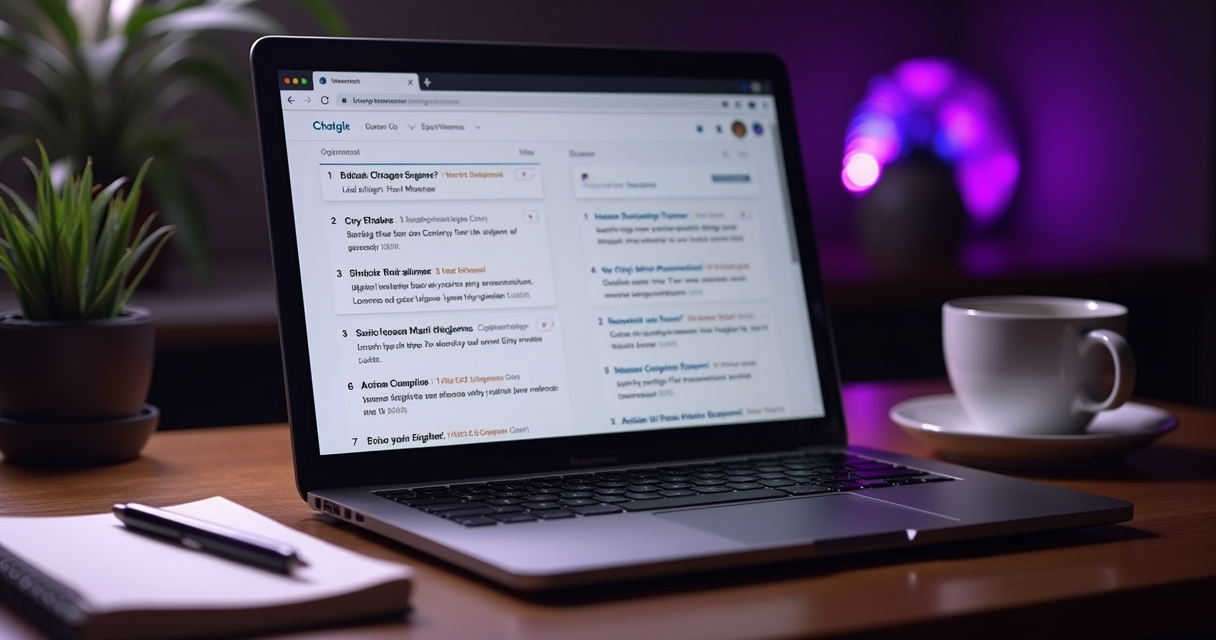
ChatGPT search without login has been free and account-free at chatgpt.com since February 5, 2025, and the marketing stakes are now measurable. By February 2026, ChatGPT referred traffic to roughly 170,000 unique domains a month, up 206% year over year, and it accounted for an estimated 92% of all trackable large language model referral traffic. OpenAI pulled down the sign-up wall just 97 days after ChatGPT search first launched behind a $20 subscription. For B2B marketing, growth, and SEO teams, the open front door reset who discovers your brand, how they arrive, and what it now takes to get cited in an AI answer.
What ChatGPT search without login actually means in 2026
The mechanic is simple, and that is the point. You open a browser, go to chatgpt.com, and start typing. There is no account, no email verification, and no password. When a query benefits from live web data, ChatGPT runs a search and returns an AI-written answer stitched from current pages, with numbered inline citation boxes that link back to the original sources. You can click the Search control to force a web lookup rather than an answer drawn only from model training data. The entire flow happens without a single sign-in prompt, which is exactly what makes it a mass-market surface rather than a subscriber tool.
There are limits, and marketers should understand them because they shape user behavior. Logged-out sessions carry tighter rate caps than signed-in ones, so a heavy research session eventually hits a ceiling and nudges the user toward creating an account. Anonymous chats are not saved to any history, so there is no thread to return to later. And the no-login access is a web feature: as of the February 2025 rollout, the native iOS, Android, and desktop apps still require sign-in to use search, which creates a platform-specific gap between the browser and the app that persists into 2026.
Here is what an anonymous user gets and gives up:
- Gets: free AI answers with live web results and clickable numbered citations.
- Gets: no account, no email, no credit card, in any modern browser.
- Gives up: saved chat history and cross-session memory.
- Gives up: the higher message and search rate limits reserved for accounts.
- Gives up: search inside the mobile and desktop apps, which still require login.
- Gives up: personalization such as custom instructions and connected tools.
The timeline: from a $20 paywall to no-login in 97 days
ChatGPT search did not arrive open. It arrived expensive, then free, then anonymous, and the compression of that sequence tells you how aggressively OpenAI wanted search share. The feature launched on October 31, 2024, and OpenAI framed it plainly in its Introducing ChatGPT search announcement as a way to get fast, timely answers with links to relevant sources. At launch it was gated to ChatGPT Plus and Team subscribers paying $20 a month, plus waitlisted SearchGPT testers.
Six weeks later, on December 16, 2024, OpenAI rolled search out to every logged-in user across Free, Plus, Team, and Enterprise plans, erasing the price barrier but keeping the account requirement. Then on February 5, 2025, it removed sign-in entirely for the web. The distance from paid-only to no-login was 97 days. That is not a slow, cautious product expansion. That is a company racing to put an AI answer box in front of anyone with a browser before rivals could lock in the habit.
| Date | What changed | Who could use it | Cost |
|---|---|---|---|
| Oct 31, 2024 | ChatGPT search launches | Plus and Team subscribers, SearchGPT testers | $20/mo |
| Dec 16, 2024 | Search opens to the free tier | All logged-in users, all plans | Free with account |
| Feb 5, 2025 | Sign-in requirement dropped (web) | Anyone at chatgpt.com | Free, no account |
| Feb 5, 2025 | Apps unchanged | Mobile and desktop app users | Login still required |
| 2025 | Chrome extension and default-search option | Browser users | Free |
| May 2026 | ChatGPT app reaches 1B monthly users | Global | Free tier available |
The table shows a deliberate ladder. Each rung removed one form of friction: first cost, then the account, then the reminder that you had to stay on chatgpt.com at all. By the time the app crossed a billion monthly users, the no-login web experience had already spent more than a year training the public to treat ChatGPT as a search destination, not just a chatbot. That conditioning is the asset OpenAI was buying with each removed barrier.
Why OpenAI tore down the account wall
Removing login was a distribution decision, not a generosity campaign. Every account prompt is a funnel leak, and OpenAI was chasing scale against the largest consumer product on the internet. The strategy worked on the top-line numbers. At its DevDay in October 2025, Sam Altman said ChatGPT had reached 800 million weekly active users, up from 300 million in December 2024 and 400 million in February 2025. Weekly actives held around 900 million into 2026, and in May 2026 the ChatGPT app crossed 1 billion monthly active users, which Reuters, citing Sensor Tower data, called the fastest any app has reached that milestone. That billion is app-level scale, not a no-login-search-only count, but the open web door fed the same funnel.
The product was also built to plug into the existing search economy rather than replace it wholesale. OpenAI's search product lead, Adam Fry, told reporters the feature runs on a mix of search technologies, including Microsoft's Bing index, that OpenAI had no plans to introduce advertising, and that any publisher can opt its site out of the crawler. On the ambition behind it, Fry was direct:
Our goal is to make ChatGPT the smartest assistant, and now we're really enhancing its capabilities in terms of what it has access to from the web. Adam Fry, OpenAI product lead for search, to MIT Technology Review, October 31, 2024.
Read that against the timeline and the intent is clear. An assistant that can read the live web, cite it, and be reached by anyone without an account is a search engine in everything but name, and it launched without the ad load that funds Google. Stripping the login was the step that turned a smart assistant into a public utility.
The traffic story B2B marketers actually care about
User counts make headlines. Referral data pays invoices. The most important shift for growth teams is that ChatGPT stopped being a walled garden and became a meaningful source of outbound clicks. According to Semrush clickstream analysis, ChatGPT referred traffic to about 71,000 unique domains a month in October 2024, peaked near 260,000 in October 2025, and settled around 170,000 by February 2026. Referral volume grew 206% year over year comparing January 2025 to January 2026. Separately, an analysis of 6.77 million AI-driven sessions found ChatGPT accounted for roughly 92% of trackable large language model referral traffic.
The distribution is brutally concentrated, which matters for strategy. More than 30% of all ChatGPT referral traffic goes to just ten domains, and more than one in five clicks lands on Google itself, because the model frequently points users to Google properties. If you are not in the head of that distribution, you are competing for a long, thin tail. Two more numbers frame the opportunity. Web search only fires on about 34.5% of ChatGPT prompts as of February 2026, down from roughly 46% in late 2024, so most answers still lean on training data, which raises the value of being memorized, not just crawled. And the visitors who do click convert. Semrush found the average AI search visitor is worth far more than an organic one:
The average AI search visitor is 4.4 times as valuable as the average visit from traditional organic search. Semrush, AI search traffic study of 500+ topics, June 9, 2025.
Put the pieces together. Fewer, higher-intent visitors, arriving pre-educated by an AI answer, converting at multiples of organic. That is why search visibility inside ChatGPT is now a revenue line, not a vanity metric, and why finance leaders are starting to ask about it directly.
ChatGPT search vs Google, Bing, and Perplexity in 2026
No-login access did not dethrone Google, but it reframed the competitive set. Google still holds about 90.39% of worldwide search as of May 2026 by StatCounter's traditional-search measure, and it answers the overwhelming majority of queries. The pressure shows up when you widen the lens beyond classic search engines. First Page Sage's Q2 2026 estimate puts Google at roughly 80% of all digital queries, ChatGPT near 17%, and everything else at about 3%. Nearly 60% of Google searches now end without a click, largely because of AI Overviews, so the raw share number hides how much answer traffic never reaches a website at all.
Inside the AI category, the field is consolidating and shifting at the same time. ChatGPT's share of chatbot web traffic slipped from about 87% to 68% across twelve months while Gemini more than doubled from 5.7% to 13.1%. In B2B specifically, ChatGPT's slice of measurable AI referrals fell to 62.6% by the March to April 2026 window, with Claude at 18.5%, Gemini at 10.6%, and Perplexity at 7.3%. The table below compares the major destinations on the dimensions that decide visibility work.
| Platform | Login for AI search | Reach or share (2026) | How it cites | Ads |
|---|---|---|---|---|
| ChatGPT Search | No on web, yes in apps | ~1B MAU; ~92% of LLM referrals | Numbered inline source boxes | None as of mid-2026 |
| Google + AI Overviews | No | ~90% search; ~80% of digital queries | AI Overview links plus blue links | Yes |
| Microsoft Bing + Copilot | No | ~12% desktop share globally | Copilot citations | Yes |
| Perplexity | No on free tier | ~7% of B2B AI referrals | Numbered citations, source panel | Limited tests |
| Google Gemini | Yes for most features | ~13% of chatbot web traffic | Inline sources | Limited |
| Claude | Yes | ~18.5% of B2B AI referrals | Web search citations | None |
The read is that ChatGPT is the only billion-user answer engine you can reach with no account and no ads, which makes its citation slots the most contested real estate in AI search. Google has scale and Gemini has the mobile default, but ChatGPT owns the open, ad-free habit.
Anonymous does not mean invisible: the privacy reality
The no-login mode is often described as anonymous, and for the marketer that word needs an asterisk. Not tying a search to an account is not the same as not being tracked. Logged-out chats are not saved to a profile history, and OpenAI does not attach them to an identity you created, but sessions are still technically traceable through IP address and browser and device signals. Several analyses note that the interface can create a persistent device identifier, so the connection between what a user retrieves and where a page ends up in your analytics is thinner and messier than a signed-in session.
That has three practical consequences for measurement and strategy:
- Attribution gaps widen. Anonymous AI referrals frequently arrive with stripped or generic referrer data, so your analytics undercount the true influence of ChatGPT on pipeline.
- Rate limits shape funnels. Tighter caps on logged-out sessions push heavy users toward accounts, which means power researchers may convert to signed-in behavior partway through a journey.
- Consent and compliance still apply. IP-level traceability means privacy and data-handling obligations do not vanish just because the user never typed an email address.
For teams building measurement, the takeaway is to stop expecting clean last-click data from AI search and start triangulating. Watch direct and branded-search lift after AI answer appearances, track self-reported attribution in forms, and monitor citation presence directly rather than waiting for a referrer string that may never come. The absence of a login lowered the barrier for users and, as a side effect, lowered the fidelity of the data you get back. Plan for that gap rather than pretending it does not exist, because the executives funding the program will eventually ask you to prove the return.
What no-login search changes for AEO, AIO, and GEO
When search sits behind an account, the audience skews toward committed users. When it is open to anyone with a URL, the audience becomes the general public, and the answer box becomes a mass-market surface. That is the strategic core of this story for anyone doing answer engine optimization. The job is no longer only to rank a page. It is to be the source an AI cites when a stranger with no account asks a question in plain language.
The evidence says citations are earned differently than rankings. Roughly 85% of AI brand mentions come from third-party pages rather than a brand's own domain, and ChatGPT leans heavily on a narrow set of trusted sources, citing Wikipedia in about 47.9% of cases and Reddit in about 11.3%. That means owned-media perfection is not enough. Presence on the pages the model already trusts is a prerequisite. The founding academic work on this, the GEO: Generative Engine Optimization paper from Princeton, Georgia Tech, the Allen Institute for AI, and IIT Delhi, presented at KDD 2024, found that adding citations, statistics, and direct quotations to content could lift visibility in generative answers by up to 40%.
80% of GEO is good, fundamental SEO. Jeremy Moser, CEO of uSERP, on where generative engine optimization overlaps with existing practice.
The practical translation for generative engine optimization and AI optimization programs is to stop treating AI search as a separate channel and start treating it as the outcome layer of strong fundamentals: authoritative content, structured data, statistics with sources, and distributed presence on the third-party pages ChatGPT already reads. The no-login shift did not invent these tactics. It raised their payoff by expanding the audience that sees the result.
The citation economy: who ChatGPT actually links to
If getting cited is the goal, it helps to know the shape of the citation graph. ChatGPT does not distribute links evenly. It concentrates them on a small number of high-trust domains, then fills in with topical sources it can verify. The dominance of Wikipedia and Reddit in the citation mix is not an accident: both are large, structured, frequently updated, and heavily linked, which are exactly the signals a retrieval system rewards. For brands, that creates a clear, if uncomfortable, order of operations. You earn your way into the trusted third-party layer first, then compete for the topical citations where your owned pages can win.
Here is a practical checklist that maps to how ChatGPT sources answers:
- Secure and maintain an accurate Wikipedia presence where notability guidelines are genuinely met, rather than forcing one that gets reverted.
- Build a real footprint in relevant subreddits and community forums, because Reddit is a top-cited source.
- Publish original statistics and data, since quantitative claims are quoted more often than opinion.
- Add clear source citations to your own content, one of the tactics the GEO study measured as most effective.
- Use direct, quotable sentences and definitions that a model can lift cleanly into an answer.
- Keep structured data and clean HTML so retrieval systems parse your pages without ambiguity.
- Earn coverage on independent, authoritative publications in your category, the third-party pages behind 85% of mentions.
The pattern rewards teams that think like a librarian, not just a copywriter. The question is not only whether your page is good. It is whether an AI, asked by an anonymous user, can find a trustworthy sentence to attribute to you. That is a higher and more specific bar than ranking on page one, and it is where AEO, AIO, and GEO budgets are moving in 2026.
Five predictions for ChatGPT search, 2026 to 2027
The no-login era is young, and the trajectory is readable from the data already on the table. Here are five specific calls for the next eighteen months, with the reasoning that supports each.
- Ads arrive despite the denials. OpenAI's product lead said there were no plans for advertising, but a billion-user, no-login answer engine with no ad load is a monetization gap that competitive and financial pressure will close. Expect a first sponsored-answer or commerce format to be tested by the end of 2027.
- Search trigger rate reverses. The share of prompts that fire a web search fell to 34.5% by February 2026, but as freshness and accuracy expectations rise, expect that number to climb back above 45% as OpenAI leans on live retrieval to reduce errors.
- Referral concentration loosens slightly. With more than 30% of clicks going to ten domains today, publisher and regulatory pressure plus source-diversification tuning should push a modestly wider citation set, helping mid-tail brands that do GEO well.
- App login for search softens. The web-versus-app gap is a self-inflicted funnel leak. Expect OpenAI to narrow or remove the app sign-in requirement for basic search to defend against Gemini's mobile default advantage.
- Measurement standards emerge. Because anonymous referrals wreck last-click attribution, expect at least one major analytics or SEO vendor to ship a standardized AI-visibility and citation-tracking metric that boards start asking about by 2027.
None of these require a technological leap. Each is an extrapolation of a curve that is already bending: usage up, friction down, monetization looming, and measurement lagging behind reality. The teams that plan against these moves now will not be scrambling when they land.
How to get started: your Monday-morning AI-visibility plan
The strategy is only useful if it turns into work you can start this week. Treat ChatGPT search without login as a live distribution channel that you can influence but not fully measure, and act accordingly. The goal for the next thirty days is simple: find out whether ChatGPT cites you today, fix the gaps that keep it from doing so, and stand up a way to track progress that does not depend on a clean referrer string.
Do these in order:
- Audit your current citation footprint. Run your top 20 commercial and informational queries through ChatGPT in a logged-out browser and record whether you appear, who is cited instead, and which sources ChatGPT trusts in your category.
- Fix the trusted-source layer. Where Wikipedia, Reddit, and major publications shape your category's answers, prioritize legitimate presence there before polishing owned pages further.
- Rewrite for quotability. Add sourced statistics, clear definitions, and direct claims to your highest-value pages so a model has something clean to lift and attribute.
- Instrument what you can. Track branded-search and direct-traffic lift, self-reported attribution, and manual citation checks on a fixed weekly cadence.
- Set a baseline and a target. Pick a citation-share number for your priority queries and hold the program to it.
If you want an outside baseline before you build the program, an AI visibility audit will tell you where you stand across ChatGPT and the other answer engines, and our approach to answer engine optimization maps those findings to the fundamentals that move citations. The account wall is gone. The audience is a billion people. The only question left is whether the AI can find a sentence worth attributing to you.
Frequently Asked Questions
Is ChatGPT search really free without an account?
Yes. Since February 5, 2025, anyone can use ChatGPT search at chatgpt.com with no account, no email, and no payment. It returns AI-written answers with live web results and numbered citations. Logged-out sessions face tighter rate limits and do not save chat history, but the core search functionality is fully free.
How do I use ChatGPT search without logging in?
Open any browser, go to chatgpt.com, and type your question. When a query needs current information, ChatGPT runs a web search automatically, or you can click the Search control to force one. The answer includes inline numbered source boxes that link to the original pages. No sign-in prompt appears during the flow.
Does ChatGPT search without login work on mobile apps?
No. The no-login access is a web-browser feature only. As of the February 2025 rollout and continuing into 2026, the native iOS, Android, and desktop apps still require you to sign in to use search. To search anonymously, use a mobile or desktop web browser at chatgpt.com rather than the installed app.
Is my data private if I use ChatGPT search logged out?
Partly. Anonymous chats are not saved to an account history and are not tied to an identity you created. However, sessions remain technically traceable through IP address and browser and device signals, and the interface can set a persistent device identifier. Anonymous is not the same as untracked, so privacy obligations still apply to your data handling.
How do I get my brand cited in ChatGPT search results?
Focus on trusted third-party presence and quotable content. About 85% of AI brand mentions come from third-party pages, and ChatGPT cites Wikipedia (roughly 48%) and Reddit (roughly 11%) heavily. Add sourced statistics, clear definitions, and citations to your pages, since the GEO research found those tactics can lift AI visibility by up to 40%.

Priya runs Skitrate's marketing automation and AI agent stack. Builds the workflows, schemas and data pipelines that move clients from manual ops to autonomous campaign management. Background in distributed systems before pivoting into ad-tech and martech in 2021. Holds patents on agentic campaign orchestration.
- Builds and operates the Skitrate AI automation stack (n8n + LangChain + Postgres + pgvector)
- Designed the agent workflows now running enrichment, scoring and reporting for 40+ clients
- Previously SRE-turned-platform-engineer at a Tier-1 ad-tech firm
- Speaker on AI in marketing operations at SaaStr and MarTech Conference