PPC News 2026: $306B Market, 68% Paid-Click Drop, ChatGPT Ads
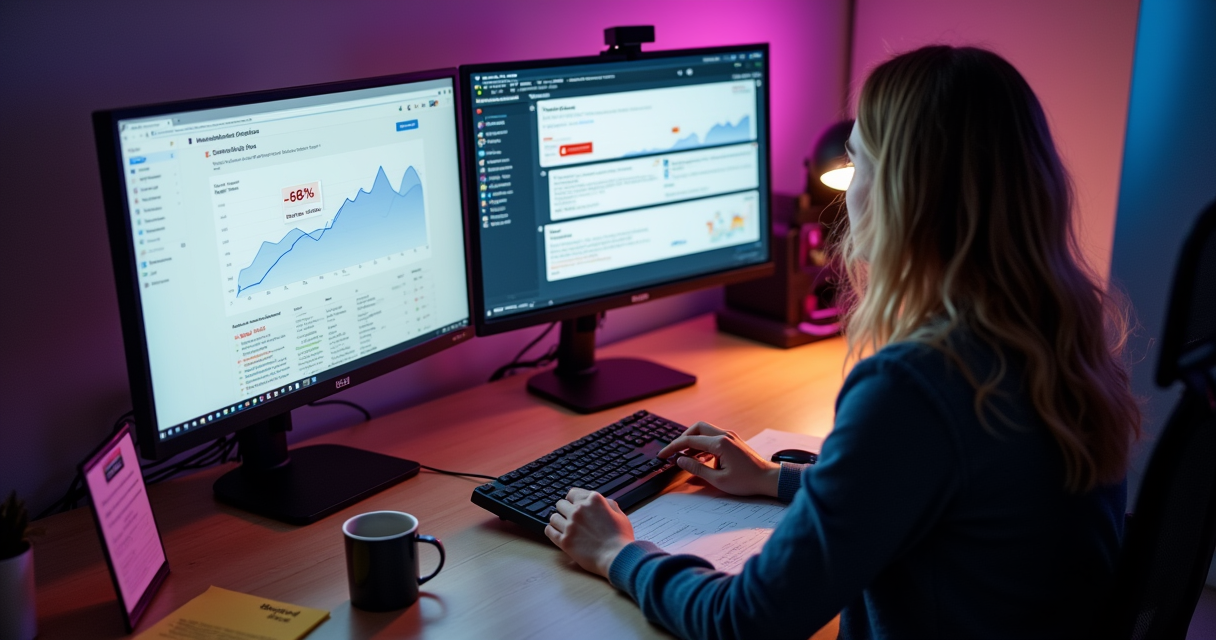
Paid search advertising will cross $306 billion worldwide in 2026, an 11% year-over-year gain, and yet the headline number buries the real PPC news of the year: the click you pay for is worth less than it was 18 months ago. Google's AI Overviews have cut paid click-through rates by up to 68% on the queries they appear on, ChatGPT began selling ads on February 9, 2026, Perplexity walked away from advertising entirely, and Alphabet still booked $60.4 billion in Search revenue in a single quarter. For B2B marketers, this is not a one-platform story. The market is splitting into paid answers and paid links at the same moment, and budgets have to move with it.
A $306 billion market that no longer moves as one
Start with the size of the prize. Global pay-per-click spending is on track to reach $306 billion in 2026, growing roughly 11% year-over-year, according to DesignRush's 2026 PPC statistics roundup. Worldwide search advertising alone is forecast at $218.3 billion, up about 8.5%. Statista's broader search-ad definition puts the figure closer to $381 billion. The methodologies differ, but the direction does not: paid search is still the largest single line item in digital advertising, and it is still growing faster than GDP.
The uniformity ends there. Mobile now carries the market. U.S. mobile ad spend passed $200 billion in 2025 and accounts for roughly two-thirds of digital budgets, pushing ad inventory into feeds, apps, and now AI chat interfaces rather than the classic ten-blue-links results page. The software layer that manages all this spend is growing too: the PPC tooling market expanded from $20.5 billion in 2024 to $22.49 billion in 2025, a 9.8% compound annual growth rate, as vendors race to bolt generative AI onto bid management and reporting.
What is new in 2026 is the fracture inside the total. A rising share of the $306 billion is being spent to appear inside AI-generated answers rather than beside search results. Another share is being defended, not grown, as advertisers pay more for fewer clicks. The aggregate keeps climbing, but the composition is changing underneath it, and that is the story the top-line forecast hides. A single number can no longer describe the paid-search market, because the market is now at least three markets wearing one label.
Why cost-per-click is rising, and why the average lies
The most repeated 2026 PPC news line is that cost-per-click is up 12% year-over-year. It is true in the verticals that matter, and misleading everywhere else. WordStream's 2026 Google Ads benchmarks put the blended average CPC at $5.42 with an 8.18% conversion rate, and the year-over-year blended change is close to flat. The flat average masks a sharp divergence underneath.
Break the data out by industry and the movement is severe. Real Estate CPCs rose 27.27% year-over-year. Personal Services and Health and Fitness both climbed about 23.41%. On the other side, Education and Instruction fell 22.79% and Beauty and Personal Care dropped 18.95%. One separate dataset pegged blended Q1 2026 search CPC at $2.96, up 12% and the steepest annual jump since 2021. The averages cancel out; the auctions do not. Five structural forces are pushing high-intent CPCs up at once:
- AI Overviews reduced organic click supply by an estimated 15% to 20%, pushing demand toward the paid slots that remain.
- Performance Max expanded auction competition across Search, Shopping, Display, and YouTube inventory simultaneously.
- Privacy-signal loss degraded targeting precision, so advertisers bid higher to hold the same volume.
- Smart Bidding now optimizes for conversion value rather than cost control, and it will pay up to hit the target.
- Venture-funded AI startups entered high-value verticals with money to burn, inflating the top of the auction.
| Industry | 2026 year-over-year CPC change | What it signals |
|---|---|---|
| Real Estate | +27.27% | Steepest increase; low inventory, high ticket |
| Personal Services | +23.41% | Local demand against a thin supply of clicks |
| Health and Fitness | +23.41% | Regulated, high lifetime value, aggressive bidding |
| Blended average, all industries | Roughly flat (one Q1 dataset: +12%) | The average hides the spread |
| Beauty and Personal Care | -18.95% | Budget rotated to social and retail media |
| Education and Instruction | -22.79% | Biggest decrease; demand softened |
The lesson for budget owners is that a benchmark deck is now dangerous if you read only the average row. A health-and-fitness advertiser planning against a flat blended CPC will be roughly 23% short by the end of the quarter. This is why sophisticated teams have stopped quoting the market number and started modeling their own vertical. If you manage paid advertising across several categories, the 2026 job is variance management, not average management.
AI Overviews and the compression of the paid click
The single most consequential PPC news of the past two years is not a platform launch. It is the arrival of Google's AI Overviews at the top of the results page and what they do to click-through rates. When Google answers the query itself, fewer people click anything, paid or organic. The reference study comes from Seer Interactive, and the numbers were stark at the peak of the shock.
Seer Interactive's September 2025 analysis found paid click-through rate on queries with an AI Overview fell to 6.34%, down from 19.7% without one, a 68% compression on the highest-intent searches, with organic CTR down 61%. (Search Engine Land)
The picture in 2026 is more nuanced, and the nuance is good news for disciplined advertisers. Seer's April 2026 update found the decline reversed: paid CTR on AI Overview queries rose from 14.6% to 16.2% in Q1 2026, while paid CTR without an Overview actually fell from 26% to 21.8%, as a follow-up study documented. Users are learning where the ads sit inside the new layout.
The more important finding is about brand citation. When a brand was named inside the AI Overview, informational queries returned a 15.74% paid CTR, versus 11.19% when it was not cited. Being referenced in the answer lifts the value of your paid click by roughly 40%. That is the mechanism fusing organic and paid: the brands that earn a mention in the generated answer convert their ads better. AI Overviews now appear on close to 48% of tracked queries per BrightEdge, so this is not an edge case. It is the median search, and it means answer visibility and paid efficiency are now the same problem measured twice.
ChatGPT starts selling ads, Perplexity walks away
For a decade the paid-search map had one continent. In 2026 it grew two more, and they moved in opposite directions. OpenAI announced advertising inside ChatGPT on January 16, 2026, and switched it on for U.S. users on the Free and Go tiers on February 9, 2026, as TechCrunch reported. Ads are labeled Sponsored, separated from the answer, and do not appear for Plus, Pro, Business, Enterprise, or Education subscribers, per OpenAI's own description.
The commercial turn came fast. On May 5, 2026, OpenAI opened a self-serve ChatGPT Ads Manager to all U.S. businesses, with no minimum spend, CPC and CPM bidding, a Conversions API, and pixel-based measurement, running across the United States, Canada, Australia, and New Zealand. In roughly three months the platform went from a closed pilot to something any small business could enter with a credit card, the same distribution path that made Google and Meta unavoidable.
Perplexity chose the opposite. After testing sponsored follow-up questions through 2024 and 2025, it pulled advertising entirely in early 2026 and repositioned as the ad-free answer engine, targeting roughly $500 million in annualized subscription revenue, as Search Engine Land noted. The bet is that trust in the answer is the product, and that ads corrode it. This is worth flagging, because plenty of 2026 trend decks mislabel that $500 million as AI ad revenue; it is a subscription target from a company that just exited ads.
For marketers the split is strategic, not academic. One large answer engine is now a biddable paid channel; another has declared it never will be. Winning inside ChatGPT looks like paid placement plus answer engine optimization. Winning inside Perplexity is purely about being the source it cites, which is an earned-media problem, not a media-buying one.
Smart Bidding, AI Max, and the automation takeover
Behind the platform headlines, the deeper 2026 PPC news is who is actually placing the bids: increasingly, not a human. More than 30% of Google search ad spend now flows through AI-enabled campaign tools like Performance Max and AI Max, according to figures Alphabet shared in April 2026. Smart Bidding, the family that includes Target CPA, Target ROAS, Maximize conversions, and Maximize conversion value, is now the default rather than the exception. Anyone still claiming a precise round-number share of spend, such as the 78% figure that circulates in trend roundups, is guessing past what the platform has actually disclosed.
Google spent 2026 deepening that default. At Google Marketing Live 2026 it reported that Smart Bidding Exploration delivered an average of 27% more unique converting users, an 18% increase in unique converting query categories, and a 19% lift in conversions. In June 2026 it renamed the strategies, folding "Maximize conversions with a Target CPA" into simply "Target CPA." AI Max, the successor to Dynamic Search Ads, moved toward automatic adoption during 2026, adding roughly 7% more conversions in Google's own tests.
The reflex to hand everything to the machine has a cost, and the field's most credited automation voice is blunt about it. Frederick Vallaeys, who helped build AdWords at Google and co-founded Optmyzr, frames the modern advertiser's job as buying insurance against the algorithm.
"I want PPC insurance. Give me the guardrails, give me the controls to bring it back to where it needs to be." Frederick Vallaeys, co-founder of Optmyzr, speaking in June 2026.
His warning is practical. Smart Bidding optimizes for whatever conversion you feed it, so a misfired tag or a stale value rule teaches the system to spend against the wrong goal at machine speed. The 2026 skill set is less about setting bids and more about setting the objective correctly and watching for drift.
Alphabet's Q1 2026 earnings show where the money still goes
For all the disruption, the incumbent is not bleeding. Alphabet reported first-quarter 2026 results on April 29, 2026, and the core ad engine accelerated rather than stalled. Google advertising revenue reached $77.25 billion for the quarter. Search and other rose 19% year-over-year to $60.4 billion, as CNBC reported and Alphabet's Form 10-Q confirms.
The internal mix tells the story of the split market. YouTube advertising brought in $9.88 billion. Google Network, the third-party publisher business, fell about 4% to $6.97 billion, the one line AI is visibly eroding as ad budgets consolidate onto owned surfaces. Consolidated Alphabet revenue hit $109.9 billion, up 22%. The table below places the major paid surfaces side by side for the same window.
| Platform | 2026 ad revenue | Year-over-year | 2026 development |
|---|---|---|---|
| Google Search and other | $60.4B (Q1) | +19% | AI Overviews on ~48% of queries; ads inside Overviews |
| YouTube Ads | $9.88B (Q1) | Growth | Shorts and connected-TV monetization |
| Google Network | $6.97B (Q1) | -4% | Only declining segment; open-web pressure |
| Amazon Ads | $17.2B (Q1) | +24% | Rufus, Sponsored Prompts, retail media |
| ChatGPT Ads | New (launched Feb 9, 2026) | Not applicable | Self-serve manager opened May 5, 2026 |
| Perplexity | $0 ad revenue | Not applicable | Exited ads; subscription-only |
Read the table and the strategic picture is clear: Search revenue is growing 19% even as the click gets compressed, because Google is extracting more value per remaining click and inserting ads into the Overviews themselves. The money is not leaving paid search. It is concentrating onto the platforms that own the answer, which is exactly why the auction is getting more expensive at the top.
Amazon and the retail-media intent shift
The other giant quietly winning 2026 is Amazon. Advertising services revenue grew 24% year-over-year to $17.2 billion in the first quarter of 2026, and the business now clears more than $50 billion annually, up from $38 billion in 2023, per Canopy Management's earnings breakdown. Retail media is no longer a sidecar to search; it is a second search economy with its own auction dynamics.
What changed is the model, not just the money. In the first quarter of 2026 Amazon launched an AI campaign type that lets advertisers build an awareness-to-conversion strategy in a single workflow using natural-language inputs. Its Rufus shopping assistant was integrated into Alexa for Shopping in May 2026, answering questions conversationally and surfacing products by intent. A new format, Sponsored Prompts, places ads inside those AI conversations, though as automated placements rather than keywords you bid on directly. Amazon PPC has shifted from keyword-driven visibility to intent-, creative-, and system-driven performance.
The cost pressure mirrors Google. Amazon CPCs climbed roughly 18% to 32% year-over-year, while worldwide paid units grew about 15%, meaning ad costs are rising close to nine points faster than the units they move. Advertisers still bidding on exact-match keyword strategies are, in effect, subsidizing the ones who adopted the intent model early. For ecommerce brands, the 2026 mandate is to feed the system clean creative and product data, because the algorithm now decides placement from intent signals rather than a manual keyword map.
The antitrust overhang reshaping the auction
No PPC news analysis in 2026 is complete without the legal cloud over the company that runs most of the auction. In August 2024, Judge Amit Mehta ruled that Google illegally maintained monopolies in general search and search text advertising. In September 2025 he issued remedies: he declined to force a Chrome divestiture but required Google to share certain search-interaction data with qualified competitors and submit to a technical committee with access to its source code under confidentiality. Google filed its notice of appeal on January 16, 2026, and the Department of Justice cross-appealed for stronger remedies, including the Chrome and Android divestitures the court rejected, as MediaPost reported.
A second case cuts deeper into ad tech. In April 2025, Judge Leonie Brinkema of the Eastern District of Virginia ruled that Google monopolized open-web digital advertising markets. A remedies proceeding ran through the autumn of 2025, and the court moved to finalize remedies in December 2025, as CNBC covered. The full docket is summarized in the public case record.
Why should a media buyer care? Because the remedies touch the data and defaults that make the auction efficient. If Google must share query data with rivals, competing engines improve, and the price of Google's own inventory has to respond. If exclusive default deals loosen, distribution fragments across more surfaces. None of this resolves in 2026, but the appeals set the rules for where paid demand can flow for the rest of the decade. Antitrust is now a line item in every serious 2026 media plan, not a footnote for the legal team.
From keyword manager to answer strategist
To understand where PPC is going, look at where it came from. Paid search began in 1998 as a manual keyword auction: pick the term, set the max bid, write the ad. For two decades the advertiser's craft was keyword and bid management. Smart Bidding, which became genuinely good around 2018 to 2020, took the bid. Performance Max, launched in 2021, took the keyword and the placement. AI Max and the answer engines are now taking the query itself, matching intent without a term you chose. Each step moved the human up the stack, from operator to objective-setter.
Vallaeys, who lived every phase of that arc from inside Google and then as a tool builder, argues the role was never really about the keyword in the first place.
"Were you a keyword manager? Was that your ability? Or were you trying to find new customers for that company? Focus on what you were trying to achieve and figure out the new means of doing that." Frederick Vallaeys, Optmyzr, June 2026.
He also notes that the reporting has converged on the business itself: "The metrics that advertisers look at have just come closer and closer to the actual business metrics that drive a business and not just some intermediate thing." The historical lesson is that every automation wave killed a tactic and promoted a skill. The advertisers who survived 2018 did not mourn manual bidding; they moved up to strategy. The same reallocation is happening now, and the winners will be the teams that treat clicks, impressions, and even keywords as intermediate metrics rather than the goal.
What the split market means for B2B marketers
Put the pieces together and the B2B implication is concrete. You are now bidding in at least four auctions with different rules: Google's answer-fused search, Amazon's intent-driven retail media, ChatGPT's new labeled-ad surface, and Microsoft Advertising, where exact match now trumps ad rank. Each rewards a different asset. Google and ChatGPT reward brand citation in the generated answer. Amazon rewards clean product data and creative. All of them reward first-party conversion signals, because Smart Bidding is only as good as the data you feed it.
The strategic consequence is that organic and paid are no longer separable line items. A brand cited in an AI Overview earns a 15.74% paid CTR versus 11.19% when it is not, so the SEO and content work that earns the citation now directly raises paid efficiency. Answer-engine visibility and paid placement compound. The teams still running SEO and PPC as separate departments with separate reports are leaving that compounding on the table. Here is what B2B marketers should actually measure in the compressed-click era:
- Share of AI Overview and answer-engine citations for your priority queries, not just rank position.
- Blended CPC modeled by your own vertical, never the market average.
- Conversion value fed to Smart Bidding, audited weekly for tag and value drift.
- Paid CTR split by AI Overview present versus absent.
- First-party audience match rates across Google, Amazon, and Microsoft.
- Revenue per remaining click, since click volume is no longer the growth lever.
The comparison that matters is not Google versus Bing anymore. It is answer surfaces versus link surfaces, and a serious 2026 plan buys both. An AI visibility audit is now table stakes before you set a single bid.
Five predictions for PPC through 2027
The 2026 data points to five specific outcomes for the next 18 months:
- By the end of 2026, AI-native ad surfaces led by ChatGPT will collectively pass $1 billion in annualized ad revenue, still under 1% of the $306 billion market but growing faster than any channel since TikTok.
- Google Search revenue will keep growing double digits into 2027 even as reported paid CTR stays compressed, because Google monetizes the Overview itself and raises value per click.
- Smart Bidding and AI Max will move from majority to near-universal on Google Search by mid-2027, and manual bidding will survive only in tightly controlled brand and compliance campaigns.
- Retail media led by Amazon will grow faster than classic search, with Amazon ad revenue clearing $60 billion annualized in 2026 as Sponsored Prompts scale inside Rufus and Alexa.
- Brand citation in AI answers will become a formal, bought-and-measured KPI, and the first ad products that let brands influence answer citation will appear before the end of 2027.
Each prediction carries a risk. The largest is regulatory: if the Mehta or Brinkema remedies force data-sharing or divestiture faster than expected, the auction math changes and CPCs could ease in Google's favored verticals. The safe planning assumption is continued concentration onto answer-owning platforms, higher cost per high-intent click, and a widening gap between advertisers who feed automation well and those who do not.
What to do Monday morning
You do not need to wait for the antitrust appeals or the next earnings call to act. The 2026 PPC news translates into a short list of moves that pay off inside a quarter:
- Re-baseline your CPC targets by vertical, not by the market average, and add 15% to 25% headroom in high-intent categories.
- Split every paid-search report by AI Overview present versus absent so you can see the real click economics.
- Audit your conversion tracking and value rules before scaling any Smart Bidding campaign; the algorithm will faithfully chase a broken goal.
- Claim your answer-engine footprint: measure citations in Google AI Overviews and ChatGPT, and brief content teams to earn them.
- Run a controlled ChatGPT Ads test through the self-serve manager if your audience is U.S., Canadian, Australian, or New Zealand based.
- Rebuild Amazon campaigns around intent and clean product data rather than exhaustive exact-match keyword lists.
- Merge your SEO and PPC reporting so brand citation and paid CTR sit in one view.
The through-line of 2026 is that paid search stopped being a single channel you optimize and became a portfolio of answer and link surfaces you allocate across. The advertisers who win the next two years will treat the click as a means, feed automation better than their competitors, and buy visibility inside the answer, not just beside it. If you want help wiring paid, organic, and answer-engine visibility into one system, that is exactly the work our paid advertising team and answer-engine practice do every day. Start Monday by pulling one report: paid CTR with and without an AI Overview. That number is your 2026 starting line.
Frequently Asked Questions
Is PPC still worth it in 2026 with AI Overviews compressing clicks?
Yes, but the math changed. Paid search still grew to a $306 billion market in 2026, and Google Search ad revenue rose 19% year-over-year to $60.4 billion in Q1. AI Overviews cut paid CTR up to 68% on affected queries, so the winning play is fewer, higher-value clicks plus brand citation inside the answer, not raw click volume.
How much did Google Ads cost-per-click rise in 2026?
It depends entirely on your vertical. WordStream's 2026 benchmarks put the blended average CPC near $5.42, roughly flat year-over-year, but that average hides the spread. Real Estate CPCs rose 27.27%, Personal Services and Health and Fitness about 23.41%, while Education fell 22.79% and Beauty dropped 18.95%. Budget against your category, never the market average.
Can businesses advertise on ChatGPT now?
Yes. OpenAI launched ads inside ChatGPT on February 9, 2026, for U.S. Free and Go users, and opened a self-serve ChatGPT Ads Manager to all U.S. businesses on May 5, 2026. It offers CPC and CPM bidding, a Conversions API, and pixel measurement across the U.S., Canada, Australia, and New Zealand. Paid subscribers see no ads.
Why did Perplexity remove advertising?
Perplexity pulled ads in early 2026 after testing sponsored follow-up questions, arguing that ads erode trust in the answer, which is its core product. Instead of monetizing with ads like ChatGPT, it is chasing roughly $500 million in annualized subscription revenue and positioning itself as the ad-free answer engine against Google and OpenAI.
What is the biggest PPC change B2B marketers should act on?
Fuse SEO and PPC. Seer Interactive found brands cited inside an AI Overview earn a 15.74% paid CTR versus 11.19% when not cited, so answer-engine visibility now raises paid efficiency directly. Split every report by AI Overview present versus absent, audit your Smart Bidding conversion values, and model CPCs by vertical rather than the market average.

Marcus owns the technical SEO and link-building practice at Skitrate. Specializes in Core Web Vitals, indexation engineering at scale (10M+ URL catalogs), and digital-PR outreach that earns links journalists actually link to. Built the audit framework that Skitrate ships to every new enterprise client.
- Led technical SEO at two SaaS unicorns before joining Skitrate
- Specializes in JavaScript SEO, log-file analysis and crawl-budget engineering
- Runs Skitrate's digital-PR program: 200+ earned links per quarter
- Routinely interviewed by Search Engine Land, Search Engine Journal